
Let's Celebrate our Wildlife Thinking, but Acknowledge it May Lead us Astray
Why they do what they do? Those are – in my opinion – the most interesting questions about wildlife.
Wildlife folks are so obsessed with population size that we sometimes get in trouble with our population thinking. To assume a trait is good for the population is often flat-out wrong.
Darwin championed evolution by natural selection – perhaps the most unifying theory in biology. Evolutionary biologists stress that we should think about individuals and the traits they have that enhance their reproductive output. Wildlife biologists sometimes forget that and ask why a trait is good for the population. Nice thought, but evolution says is that traits need only to be good for individuals to be successful.
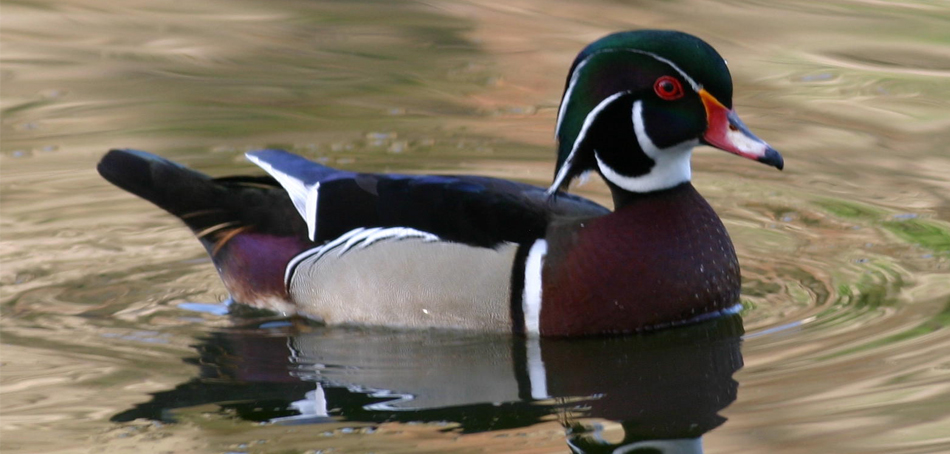
Parasitism is successful if the parasitic Wood Duck gains an advantage – even if the population would be larger without parasitism, with only “normal” nesting. Wood Duck parasitism is a way to get some additional kids with little risk – remember nesting hens face high mortality.
In mammals, infanticide is good for some individuals via reduced competition (squirrels) or for dominant males if females who kids are killed then re-cycle sooner and have kids with the new top male (lions/langurs). Infanticide does not benefit the population and certainly not the females that lose their young.
Apologies for the length. This is daily picture 100 – so I opted for a couple extra lines and a big theme.
Frank