
Delta Waterfowl Receives Grant from Mathwig Trust to Launch Breeding Duck Habitat Initiative
The award supports hiring a habitat extension coordinator to strengthen landowner relations and conserve small wetlands
BISMARCK, NORTH DAKOTA — Delta Waterfowl is deepening partnerships with private landowners looking to enroll in conservation programs by establishing a new habitat extension coordinator position. The new role is supported by a $200,000 grant from the Mathwig Family Charitable Trust, with the potential to unlock and leverage tens of millions of federal dollars for small wetland conservation across the U.S. prairie pothole region.
“We are grateful for the support from the Mathwig Family Charitable Trust, which will allow Delta to serve as a trusted liaison to landowners in the Prairie Pothole Region by helping them enroll in conservation programs,” said Eric Lindstrom, Delta’s chief development officer. “We are looking forward to fostering these new relationships to work toward Delta’s mission of producing ducks, conserving critical breeding habitat, and ensuring the future of waterfowl hunting in North America.”
The Mathwig Family Charitable Trust partners with organizations to find innovative solutions to support waterfowl habitat conservation, breeding, nesting, and migration. Through this collaboration with Delta, more landowners are poised to serve as stewards to conserve crucial duck habitat on their properties.
“It’s best when we can remove as many barriers as possible for landowners to interact with conservation programs,” said Mike Szymanski, executive vice president and director of conservation programs for the Mathwig Family Charitable Trust. “Having someone from Delta in the field who is able to interact with landowners will be an incredible asset for the future of duck production in the prairie pothole region.”
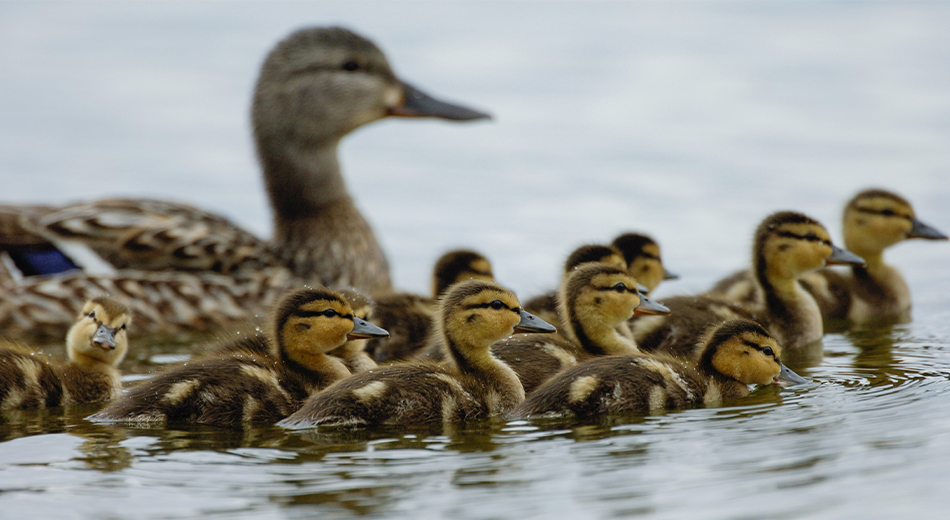
Up to 70 percent of North America’s ducks are hatched each year in the PPR in the northern Great Plains. About 90 percent of the PPR breeding grounds is privately owned, with much of this land consisting of crop production. Small, shallow ponds in this region provide essential nutrition to nesting hens and ducklings, including necessary territorial spacing. These landscapes, however, are vanishing. More than 93,500 wetland acres of have been lost in the PPR from 1997 to 2009, while millions of wetland basins across the U.S. prairies remain at risk.
Delta’s habitat extension coordinator will focus on assisting landowners in the PPR in the U.S. to participate in conservation programs and habitat restoration initiatives that are available from federal, state, and NGO partners. In particular, the coordinator will focus on increasing enrollment in programs under the Migratory Bird Habitat Initiative. Through the Environmental Quality Incentives Program in the U.S. Farm Bill, the MBHI provides fair compensation for landowners who conserve critical duck-producing ponds with the goal of reversing the decline of migratory bird populations in North America.
“This new position will allow Delta to leverage the shared interest of duck hunters and landowners to conserve the most important breeding habitat in North America,” said Joel Brice, Delta’s chief conservation officer. “With the rate of wetland losses we’ve seen in the prairies in the past two decades, it’s imperative that we work with landowners on solutions to slow drainage, incentivize conservation, and maintain breeding duck carrying capacity.”
Delta Waterfowl is The Duck Hunters OrganizationTM, a leading conservation group founded in 1911 that uses science-based solutions to produce ducks, conserve prairie wetlands, and secure the future of waterfowl hunting in North America. Visit deltawaterfowl.org.
For more information, contact Joel Brice at jbrice@deltawaterfowl.org.