
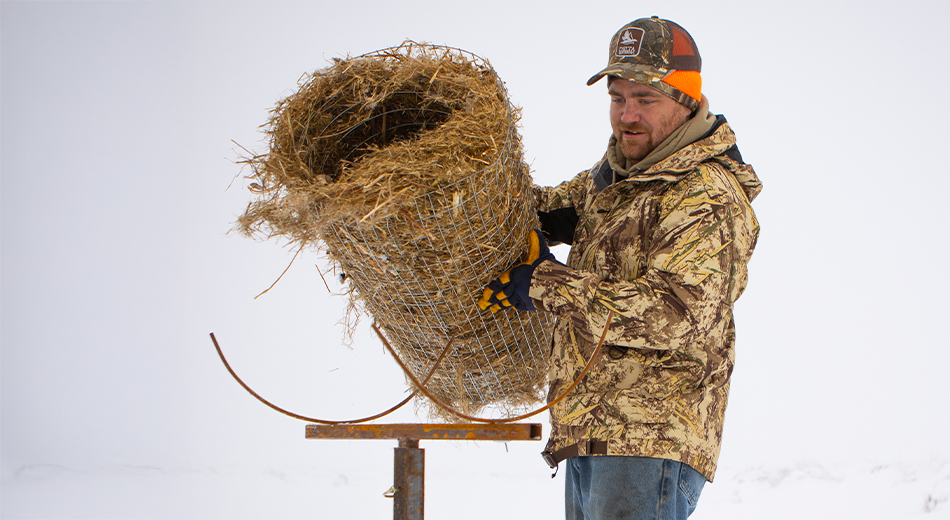
Delta Waterfowl Boosts Mallard Numbers with Hen House Program
The Duck Hunters OrganizationTM plans to add 2,200 nest structures this winter in key breeding areas
BISMARCK, NORTH DAKOTA — While hunters are stowing their gear as another winter winds down, Delta Waterfowl’s Hen House contractors are prepping for next duck season by fanning out across prime wetland habitat to install nest structures.
By March, Delta plans to wrap up the installation of 2,200 Hen Houses in key breeding grounds, which includes 700 new nest structures in Manitoba, 600 in Saskatchewan, 500 in North Dakota, and 400 in Alberta.
“Every Hen House that we install provides essential shelter for mallards so that we can boost their numbers on the landscape,” said Matt Chouinard, waterfowl programs director. “Among ducks that use a Hen House, nest success is up to 12 times higher than a hen that nests in nearby ground cover.”
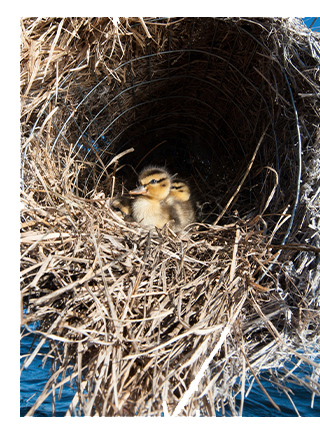 The total number of Hen Houses deployed will amount to more than 16,500, which is projected to add more than 38,000 fledged mallards to the 2026 fall flight.
To enhance the expansion of Hen Houses, Delta hired 10 additional contractors to work across a wide swath of the prairie pothole region. The team of 56 will install new nest structures and make repairs on those from previous years.
“Our contractors are our eyes and ears in the field, refreshing flax nesting materials and identifying suitable locations for new Hen Houses,” said Joel Brice, Delta’s chief conservation officer. “They are crucial to the success of this program and Delta’s broader mission to produce ducks.”
Delta’s Hen House Program began on the Canadian prairie in 1991, when the first structures were installed in Manitoba wetlands. The structures are used primarily by mallards and are placed strategically in areas of the breeding grounds that attract high densities of nesting ducks but where grassland nesting cover is scarce. Often, intensely farmed areas of the prairies house abundant predator populations such as raccoons and skunks that take a toll on duck nests. Delta’s Hen Houses, which are lined with flax straw and mounted on poles over shallow, semi-permanent wetlands, keep hens and their eggs safely out of reach of most mammalian predators.
With many thousands of nest structures spread across the prairies, Delta biologists in Canada and the United States have continued to compile data about deployed Hen Houses and their individual use to uncover opportunities to increase the efficiency of the program.
“As we continue to grow, we’ll be able to refine our model with the ultimate goal of adding more and more fledged mallards to the fall flight,” Chouinard said. “Sound science has guided this program from the beginning and it will continue to inform decisions about Hen House deployment and our strategy.”
Banding return data shows that mallards hatched on the U.S. and Canadian prairies migrate throughout all four flyways, so Delta’s Hen Houses boost the fall flight from coast to coast.
Delta received recent grants in support of the Hen House Program from Wildlife Habitat Canada, Manitoba Fish and Wildlife Enhancement Fund and Manitoba Conservation Trust under the management of the Manitoba Habitat Conservancy, Alberta Professional Outfitters Society, and Saskatchewan Fish and Wildlife Development Fund. In addition, donor Bobby Glover contributed a major gift to build and install new structures.
Delta Waterfowl’s mission of producing more ducks was bolstered by the Million Duck Campaign, a three-year fundraising effort that netted $284 million with a goal of adding 1 million ducks to the fall flight every year. At maturity, Delta’s Duck Production programs will result in 109,647 Hen Houses to welcome hen mallards each spring across the North American breeding grounds.
“Every year, we are adding more Hen Houses and expanding our reach across the U.S. and Canadian Prairies, all in an effort to add more ducks to the fall flight,” Brice said. “Delta’s Duck Production programs benefit waterfowl populations and hunters in every flyway.”
Delta Waterfowl is The Duck Hunters OrganizationTM, a leading conservation group founded in 1911 that uses science-based solutions to produce ducks, conserve prairie wetlands, and secure the future of waterfowl hunting in North America. Visit deltawaterfowl.org.
For more information about Delta’s innovative Hen House Program, contact Matt Chouinard at mchouinard@deltawaterfowl.org or (701) 222-8857 ext. 5209.